South Africa’s reform drive is expanding into new areas as government works to improve local services and make life easier for citizens, Finance Deputy Minister David Masondo announced on Friday, January 30.
Through Operation Vulindlela (OV), local government is receiving support to better manage their budgets, with special incentives for major cities that improve basic services like water and electricity.
Government is also working to reduce inequality by developing cheaper housing options and speeding up infrastructure projects on well-located public land.
“Digital reform continues to improve access to government services and modernise payment systems, supporting a more efficient and responsive state,” the Deputy Minister said in a briefing in Johannesburg.
He stressed that reforms must continue without interruption: “The economy cannot afford pauses or reversals in the reform programme. Structural reforms require consistency, collaboration, and a commitment to sustained execution.”
Masondo emphasized that progress depends on maintaining focus across all sectors. “Whether we are dealing with energy, water, logistics, visas, digital infrastructure, spatial inequality or the efficiency of the state, every step forward strengthens the foundation on which growth and investment depend,” he said.
Phase II of Operation Vulindlela (OV) builds on the momentum created since 2020, when OV was established.
Its continuation under the Government of National Unity reaffirms government’s commitment to driving more rapid, sustainable, and inclusive growth by removing the structural barriers that have long constrained the economy.
“As you may recall, the second phase of OV builds upon and expands the priority reforms identified in the first phase and introduces new reforms that are expected to support economic growth, improve service delivery and strengthen state capacity,” Masondo explained.
Reforms Show Measurable Impact
Government structural reforms aimed at boosting inclusive economic growth and job creation are starting to produce measurable improvements in South African lives, according to the third quarter Operation Vulindlela Progress Report
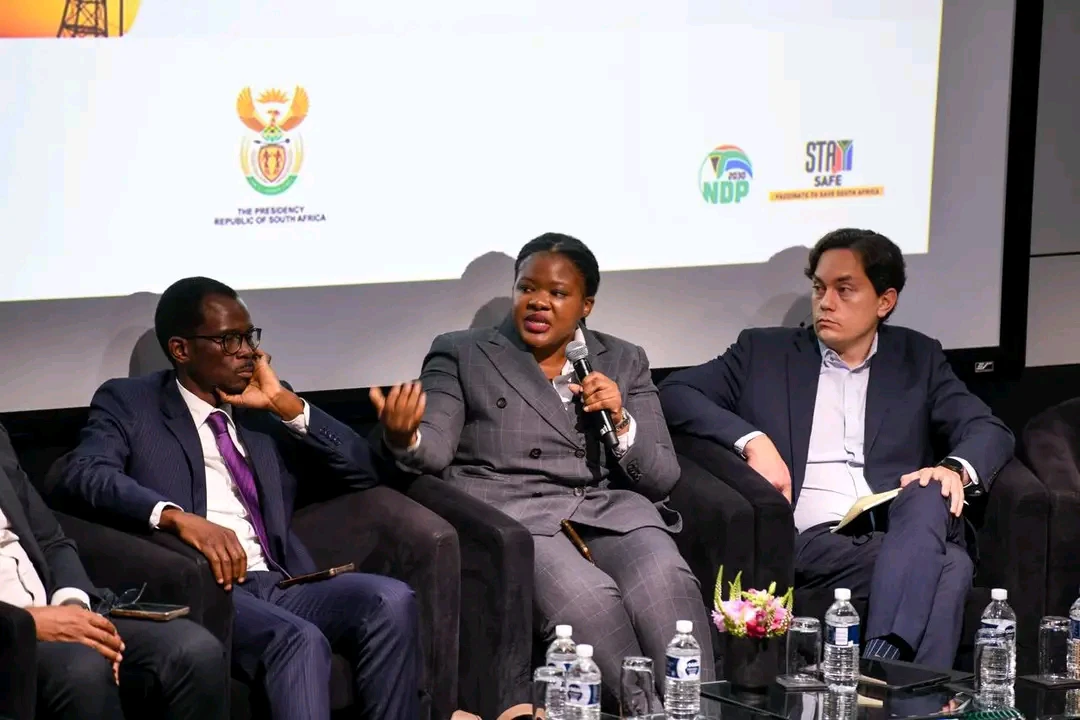
Deputy Minister in the Presidency Nonceba Mhlauli highlighted several successes: “The reduction in load shedding, which has resulted from reforms in the energy sector, has had a tangible impact on every household and business.
Likewise, reforms in the rail system have supported the recovery of passenger rail services, with the majority of corridors now up and running and providing cheaper public transport for people in every major city.”
Rail services recorded dramatic gains, with passenger trips nearly doubling to 77 million during 2024/25.
Tourism also reached record levels, with 10.48 million visitors arriving in 2025—a 17.6% increase that supports 1.8 million jobs.
Economic indicators show promise, with unemployment falling to 31.9% and four consecutive quarters of GDP growth. “We are turning a corner, largely as a result of our commitment to far-reaching economic reform,” Mhlauli said, adding that these changes are “about unlocking much higher rates of fixed investment in the economy and powering long-term growth.”
The Deputy Minister emphasized that reform efforts are transitioning from planning to implementation, with positive economic signals emerging.
“As the President has said, we are seeing important green shoots in the economy. Four consecutive quarters of positive economic growth, declining unemployment, a strengthening currency, and rising commodity prices are all acting as powerful tailwinds for our economic recovery,” she said.
“The reform programme that we are pursuing through Operation Vulindlela is essential to ensure that these positive indicators result in a sustained shift in our economic trajectory, rather than a temporary lift in growth. Ultimately, these reforms – whether in the energy, water and logistics sectors or in the immigration system – are about unlocking much higher rates of fixed investment in the economy and powering long-term growth,” Mhlauli explained.
Launched in October 2020, Operation Vulindlela is a collaborative initiative between the Presidency and National Treasury designed to accelerate priority structural reforms that support economic growth, enhance service delivery, and strengthen state capacity.