Op-ed: Rand Water excels in infrastructure maintenance
As demand for water continues to grow, ongoing investment in infrastructure upkeep remains a priority for ensuring the well-being of communities and industries.

Water is one of the most crucial resources for human survival, economic development, and environmental sustainability. To ensuring a continuous and reliable water supply requires proper maintenance of water supply infrastructure.
This article explores the necessity of infrastructure maintenance, its challenges and how Rand Water has implemented major maintenance initiatives in 2024 – 2025.
The Role of Infrastructure Maintenance in Water Supply
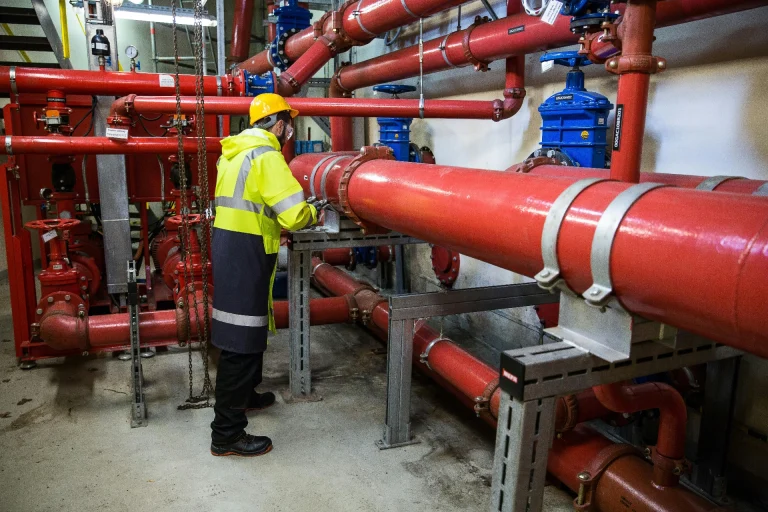
Maintaining water supply infrastructure is essential for ensuring safe, clean, and uninterrupted water distribution. This involves a variety of tasks such as inspecting, repairing, and replacing aging infrastructure components, upgrading systems to handle increasing demand, and implementing preventive maintenance measures.
Key elements of this maintenance include:
1. Replacement and Repair of Worn-out Pipelines
o Old and corroded pipelines lead to leaks and water loss, which can reduce efficiency and increase operational costs.
o Unmaintained pipelines can cause contamination of drinking water, posing health risks to consumers.
o Regular pipeline inspections and timely replacement help to minimize disruptions and extend the life of the water distribution network.
2. Fixing Leaking Reservoirs
o Reservoirs store and regulate water distribution, but cracks and leaks can cause significant water loss.
o Structural failures in reservoirs can compromise water quality by allowing contaminants to infiltrate the system.
o Scheduled maintenance and necessary reinforcements ensure that reservoirs function optimally, maintaining water pressure and availability.
3. Construction of Water Purification Plants
o To meet the increasing demand for clean water, constructing additional purification plants is essential.
o These facilities treat raw water to remove impurities, ensuring compliance with health and safety standards.
o Expanding and upgrading purification plants enhances the efficiency of water supply systems, reducing the burden on existing infrastructure.
Challenges of Infrastructure Maintenance
Despite its importance, water infrastructure maintenance encounters several challenges, including:
High costs associated with repairs, replacements, and upgrades.
Disruptions in water supply during maintenance periods.
Aging infrastructure that requires continuous monitoring and intervention.
Environmental and climatic conditions that may accelerate infrastructure degradation.
Impact of Maintenance on Water Supply
During maintenance activities, temporary water supply shortages may be experienced. These interruptions are necessary to facilitate essential repairs and upgrades. While inconvenience is inevitable, proactive planning and communication help mitigate the impact on consumers.
Consequences of Neglecting Maintenance
Failure to execute regular maintenance can have severe repercussions, including:
Increased water losses due to undetected leaks.
Higher risks of water contamination, leading to public health crises.
Structural failures in pipelines and reservoirs, resulting in prolonged service disruptions.
Escalating costs due to emergency repairs rather than planned maintenance.
Rand Water’s Commitment to Infrastructure Maintenance
Rand Water, as a key water supplier in South Africa, has been actively engaged in maintaining and upgrading its infrastructure to ensure sustainable water supply. The organisation has a five-year maintenance program to repair and replace its infrastructure and is also obligated by the legislative requirement to clean its reservoirs
Infrastructure maintenance plays a pivotal role in preventing corrosion that may lead to pipeline burst, therefore, negatively impacting on the quality of clean water.
Lack of water supply infrastructure maintenance has the potential to disrupt the feasibility of economic growth and work opportunities in its areas operation. Overall, it may lead to unemployment, poverty, degradation, and the eruption of diseases.
It is important to note that the implementation of any planned maintenance project will ensure that Rand Water stands the chance to increasing its network management capabilities leading to the reduction of the potential failures in its systems.
Infrastructure development and augmentation
Increasing water demand is fuelled by factors such as rapid population growth, industrialisation and general irresponsible use of water by some consumers.
Rand Water’s commitment to infrastructure development was evident when the oganisation launched the newly-built 210 Megalitres Vlakfontein Reservoir in the City of Ekurhuleni and the Station 5 Water Treatment Plant within the Zuikerbosch Water Treatment Plant. This was indicative of the organisation’s commitment to ensure uninterrupted water supply to its customers.
Types of planned infrastructure maintenance
Preventive and Routine Maintenance – It is the implementation of planned maintenance to prevent the likelihood of infrastructure failure. It is implemented following strict adherence to procedures and protocols such as proper assessment, feasibility of a successful implementation of the project and the identification of the peripheral factors that may negatively affect the implementation of the project.
Predictive Maintenance – it is the use of technologies to assist in the prediction of the likelihood of the possible infrastructure failure and physical inspections that need to be conducted online and / or offline monitoring of the plant and equipment, diagnose the conditions and detect failures before they occur. Rand Water has acquired multiple advanced technologies that on par with the Fourth Industrial Revolution (4IR).
Connected Predictive Maintenance – it is real time plant performance monitoring as Information Technology (IT) and Operational Technologies (OT) infrastructure capabilities improve.
Some major maintenance initiatives include:
1. June – July 2024 Infrastructure Maintenance
o Rand Water conducted large-scale maintenance work, focusing on replacing aging pipelines and repairing reservoirs.
o Strategic shutdowns were implemented to minimize disruptions, ensuring efficient completion of maintenance tasks.
o Upgrades to key pump stations were executed to enhance water pressure and supply efficiency.
2. December 2024 – 86-Hour Infrastructure Maintenance
o This extensive maintenance project involved critical repairs to the bulk water supply system.
o Work included the reinforcement of reservoirs and pipeline realignments to prevent future failures.
o Rand Water collaborated with municipalities and stakeholders to ensure alternative water supply measures were in place during the maintenance period.
3. May – July 2025 infrastructure maintenance
o Rand Water undertook to implement multiple critical maintenance of its key infrastructure projects
o The maintenance was aimed at increasing capacity, improve plant availability, reliability and operational efficiencies.
o This maintenance was strategically scheduled during low water demand months to minimise supply interruptions
o The major maintenance project during this period was the tie-in of B16 Pipeline from Zuikerbosch and Station 5 Water Treatment Plants which took 107 hours and was completed ahead of the scheduled time.
Building and maintenance of water infrastructure is vital to ensuring a reliable and sustainable supply of potable bulk water to customers.
Regular inspection, timeous repairs, and strategic infrastructure upgrades prevent water loss and minimise supply service disruptions.
While maintenance activities may cause temporary inconveniences, however, the long-term benefits far outweigh the temporary water shortages.
Rand Water’s dedication to infrastructure maintenance, particularly during the 2024 – 2025 maintenance initiatives, underscores the importance of proactive management in securing South Africa’s water future.
As demand for water continues to grow, ongoing investment in infrastructure upkeep remains a priority for ensuring the well-being of communities and industries.