Peaceful anti-illegal immigration marches sweep across Gauteng
Government has commended those who participated for exercising their constitutional right to protest in a peaceful and disciplined manner.

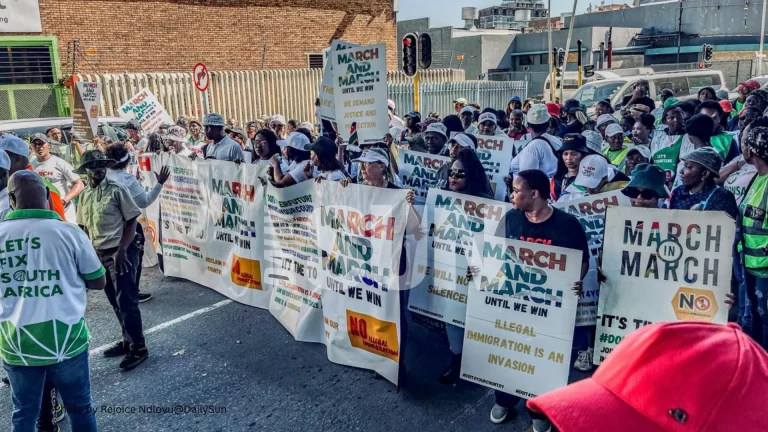
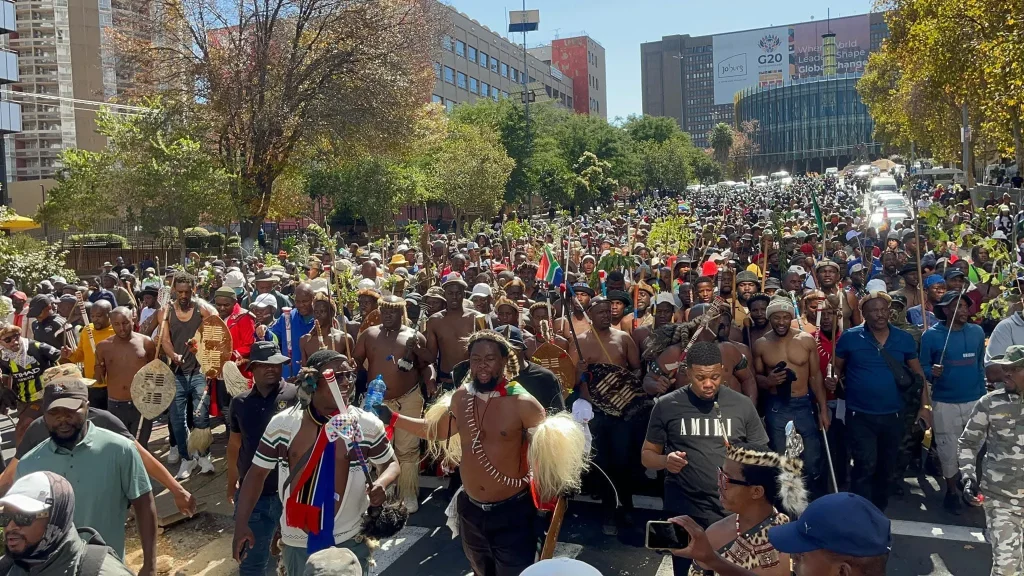
Gauteng has, over the past two days, witnessed large-scale yet peaceful demonstrations organised by civic organisations and political parties, as thousands of residents took to the streets to protest against illegal immigration.
The marches, which drew significant crowds across the Johannesburg CBD and surrounding areas including Hillbrow and Braamfontein, were marked by orderly conduct and a strong police presence. Participants carried placards and sang protest songs, calling for stricter enforcement of immigration laws and improved border control measures.
Government has commended those who participated for exercising their constitutional right to protest in a peaceful and disciplined manner. Officials highlighted that adherence to the rule of law during the demonstrations reflects responsible citizenship.
The protests come amid growing public discourse around immigration, particularly concerns related to undocumented foreign nationals and their perceived impact on local communities and economic opportunities.
In a statement issued by the Government Communication and Information System (GCIS), government reaffirmed its commitment to safeguarding South Africa’s sovereignty, national security, and the rule of law, while also upholding constitutional values and respect for human dignity.
“Government is strengthening measures to address illegal immigration, including tightening border controls to combat unlawful entry, illicit trade, and fraudulent activities that undermine revenue collection and the rule of law,” the statement read.
According to GCIS, these interventions form part of a broader programme aimed at modernising and reforming South Africa’s immigration and border management systems. The goal is to create a system that is secure, efficient, and responsive to the needs of a modern economy.
A key component of this reform is the planned introduction of the Electronic Travel Authorisation (ETA) system. Authorities say the system will enhance the country’s ability to manage the movement of people in a secure, transparent, and efficient manner.
During the demonstrations, civic groups including March and March and the Amabhinca nation led coordinated marches through the cities of Johannesburg and Tshwane.
On Wednesday, April 29, the groups eventually gathered at the Gauteng Legislature, where a memorandum of demands was formally handed over to Premier Panyaza Lesufi.
The memorandum calls for intensified law enforcement operations targeting illegal immigration and related criminal activities. It also urges government to take decisive action to restore order and ensure that immigration laws are consistently enforced.
Law enforcement agencies have been urged to respond firmly to these concerns, with many protesters voicing the sentiment that lawlessness cannot be allowed to persist.
While the demonstrations remained peaceful, authorities continue to monitor the situation closely, balancing public concerns with the need to uphold human rights and social cohesion in one of South Africa’s most densely populated provinces.