China’s Global Governance Initiative: A Framework for Reform for the African Union
The two sides had an in-depth exchange of views on implementing the Global Governance Initiative, China-Africa human rights exchanges, and multilateral cooperation.

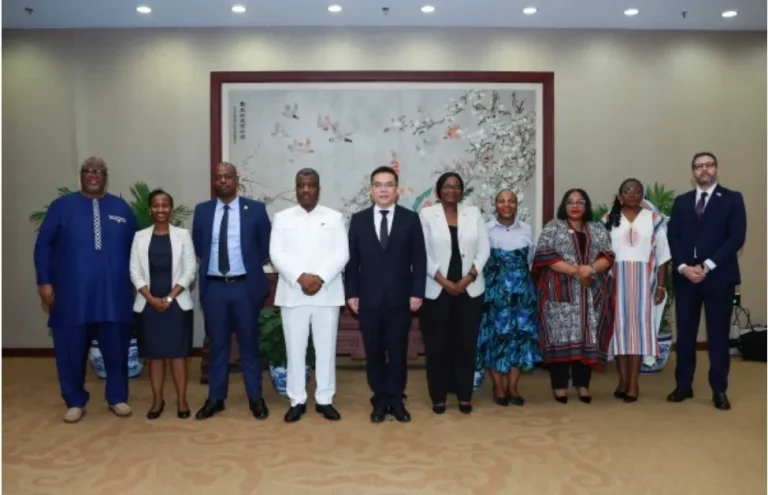
China and the African Union held the fifth consultation on human rights in Beijing on September 3.
Director-General of the Department of International Organizations and Conferences of the Foreign Ministry Shen Jian met with Director of the Governance and Conflict Prevention Department of the African Union Commission Patience Zanelie Chiradza and her delegation.
The two sides had an in-depth exchange of views on implementing the Global Governance Initiative, China-Africa human rights exchanges, and multilateral cooperation.
Origins of the GGI
In September 2025, Chinese President Xi Jinping introduced the Global Governance Initiative (GGI) during the Shanghai Cooperation Organisation summit.
The proposal arrived as the United Nations marked its 80th anniversary and as debates intensified over the effectiveness of existing international institutions. Positioned as a complement to China’s earlier Global Development, Security, and Civilization Initiatives, the GGI seeks to address what Beijing describes as a growing “global governance deficit.”
At its core, the initiative rests on five principles: sovereign equality among nations, adherence to international rule of law, genuine multilateralism, a people-centered approach, and a focus on practical results.
These ideas draw explicitly from the purposes and principles of the UN Charter while calling for greater representation of developing countries—often referred to as the Global South—in bodies such as the United Nations, the International Monetary Fund, and the World Trade Organization.
Supporters argue that current structures still reflect post-World War II power distributions that no longer match today’s economic and demographic realities.
The GGI therefore encourages reforms that expand participation, reduce unilateral actions, and emphasize consultation and joint contribution for shared benefit.
Chinese officials have presented it as a public good intended to strengthen solidarity and deliver more inclusive outcomes on issues ranging from development and security to climate and digital governance.
The initiative has drawn expressions of support from more than 140 countries and international organizations. In diplomatic practice it has already appeared in bilateral and multilateral discussions, including human-rights consultations between China and the African Union.
There, the GGI has been linked to broader conversations about the right to development and cooperative approaches to global challenges.
Whether the GGI ultimately reshapes formal institutions remains an open question. What is clear is that it represents China’s most systematic attempt yet to articulate an alternative vision of how the international system should operate in a multipolar era—one that prioritizes equality of voice, pragmatic cooperation, and the interests of a wider range of states.