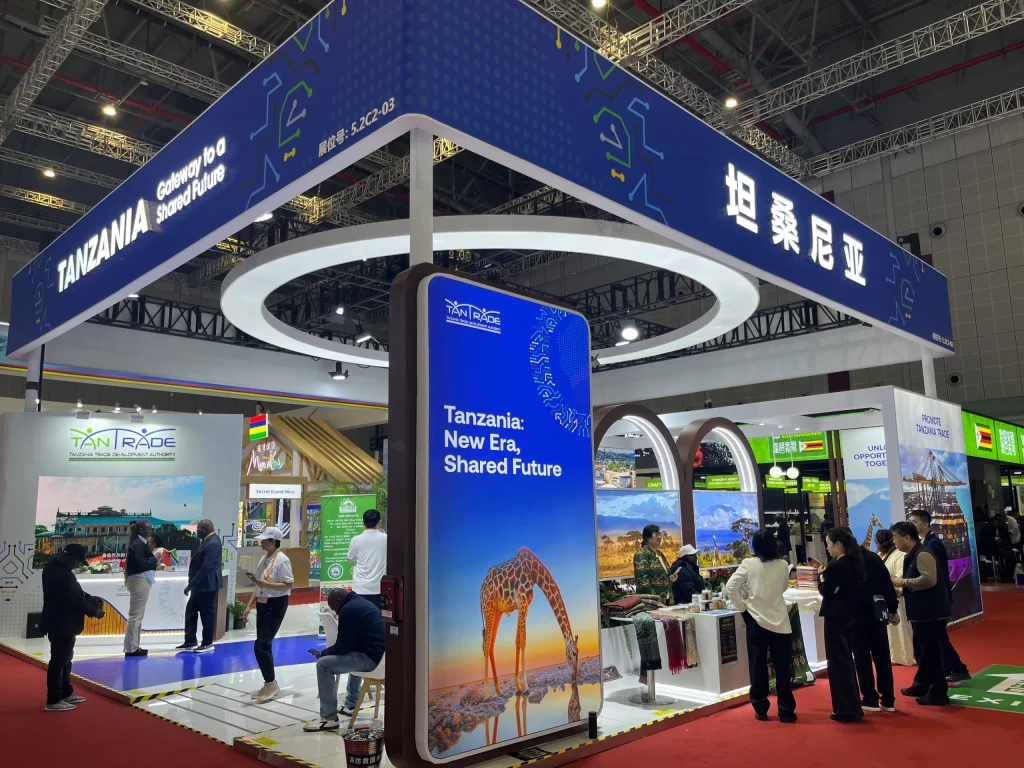


Tanzanian coffee is drawing strong interest from Chinese buyers and visitors at the ninth China International Import Expo (CIIE), which runs from November 5 to 10, 2026, in Shanghai.
The specialty product, displayed alongside honey, cashews, and handmade crafts in the Tanzania Pavilion, highlights growing opportunities created by China’s zero-tariff policy for African goods.
Chinese Ambassador to Tanzania Chen Mingjian noted the positive reception in a recent post, stating she was glad to see Tanzanian coffee, honey, and handmade art so well-received.
She encouraged exhibitors to use the platform to expand into the Chinese market and share in new development opportunities under the zero-tariff framework. The Chinese Embassy in Tanzania similarly reported that the pavilion is bustling with visitors and that Tanzanian coffee, honey, cashews, and ebony wood carvings are widely popular.
Tanzania sent a sizable delegation of enterprises and government institutions, including coffee producers, to the expo. Participants showcased green and roasted coffee alongside other agricultural products in a pavilion featuring imagery of the country’s landscapes, such as savannas and Mount Kilimanjaro. Displays of packaged coffee beans and related goods attracted crowds interested in sampling and exploring commercial partnerships.
The timing aligns with China’s zero-tariff treatment for all products from 53 African countries with which it maintains diplomatic relations, implemented earlier in 2026. Officials say this has improved the competitiveness of Tanzanian agricultural exports. China’s imports from Tanzania reached $290 million in the first half of 2026, up 12 percent year-on-year. Bilateral trade stood at approximately $11.28 billion in 2025. Fifteen categories of Tanzanian agricultural products have market access, and hundreds of enterprises are registered to export food and farm goods to China.
Tanzanian coffee, known for its quality and unique flavor profiles from highland growing regions, stands to benefit as Chinese consumers show rising interest in specialty and origin-specific coffees. Exhibitors aim to secure orders, build distribution networks, and attract investment in value-added processing rather than solely exporting raw beans. Deputy Minister for Industry and Trade Dennis Londo and other officials have urged participants to focus on concrete business outcomes, including partnerships that support packaging, branding, and compliance with Chinese standards.
The CIIE serves as a major platform for Global South producers to access China’s vast consumer market.
For Tanzania, successful engagement with coffee and complementary products like honey could help diversify exports, increase farmer incomes, and strengthen long-term China-Tanzania economic ties. As the expo continues through November 10, Tanzanian coffee’s visibility underscores the practical impact of open trade policies and targeted promotional efforts.