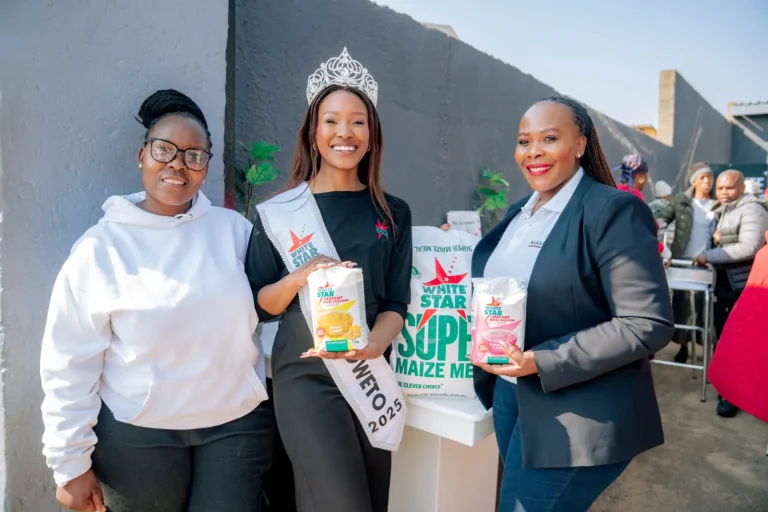

Reigning Miss Soweto, Lungile Siyaphi, has reaffirmed her commitment to community upliftment by leading a food donation initiative that provided much-needed support to more than 180 vulnerable children and elderly residents in Orlando East.
Held as part of July’s spirit of giving, the outreach programme benefited the Mamlangeni Feeding Scheme, a community initiative Siyaphi co-founded with her aunt, Mingi Maake.
The feeding scheme has served the Orlando East community since 2018 by providing daily meals, youth development programmes and support for families facing economic hardship.
The initiative received a boost from White Star, which donated maize meal and instant porridge to help strengthen the feeding scheme’s efforts to tackle food insecurity.
Siyaphi said addressing hunger is about restoring dignity and creating opportunities for communities to thrive.
“Food is a basic human need, but it is also a symbol of hope. When we ensure that children and elderly people have access to nutritious meals, we invest in healthier communities and a brighter future,” she said.

The donation enabled the feeding scheme to extend its support to more families, highlighting the impact of partnerships between community leaders and the private sector in addressing social challenges.
White Star’s contribution reflects its commitment to supporting initiatives that improve the wellbeing of South African families through practical and sustainable interventions.
Siyaphi said the campaign was inspired by the values of ubuntu and encouraged South Africans to work together in supporting those facing difficult circumstances.
“Real change begins when communities stand together. Every contribution, no matter how small, has the power to make a lasting difference,” she said.
As she continues using her Miss Soweto platform to champion youth empowerment and community development, Siyaphi has called on businesses, organisations and individuals to support programmes that fight hunger and create opportunities for vulnerable communities.
She said collective action remains key to building stronger, more resilient communities where every child and elderly person has access to the care and support they deserve.