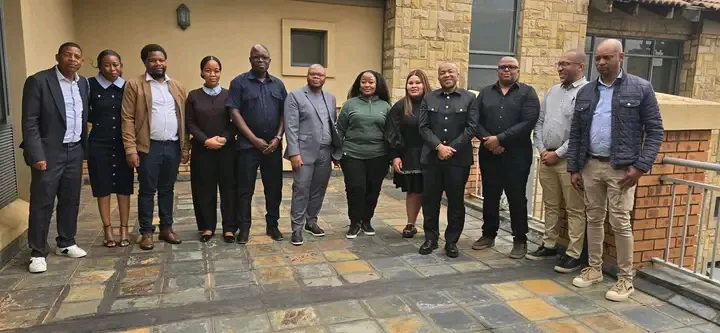
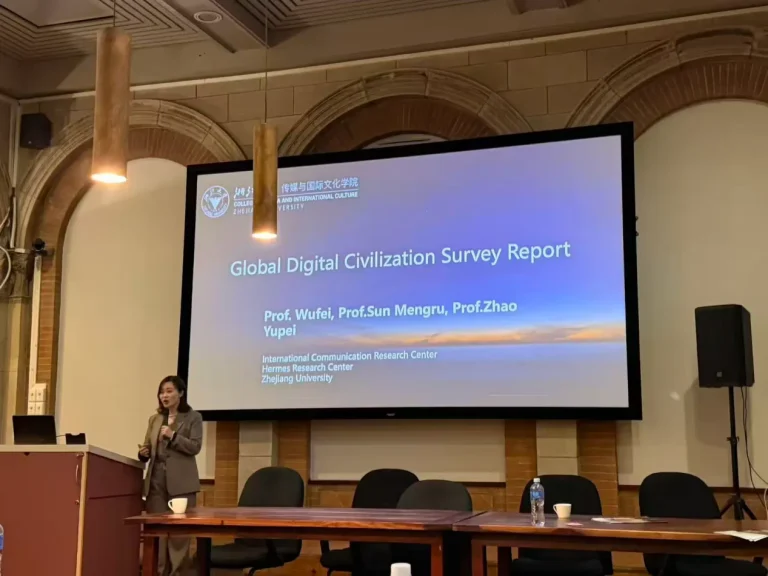

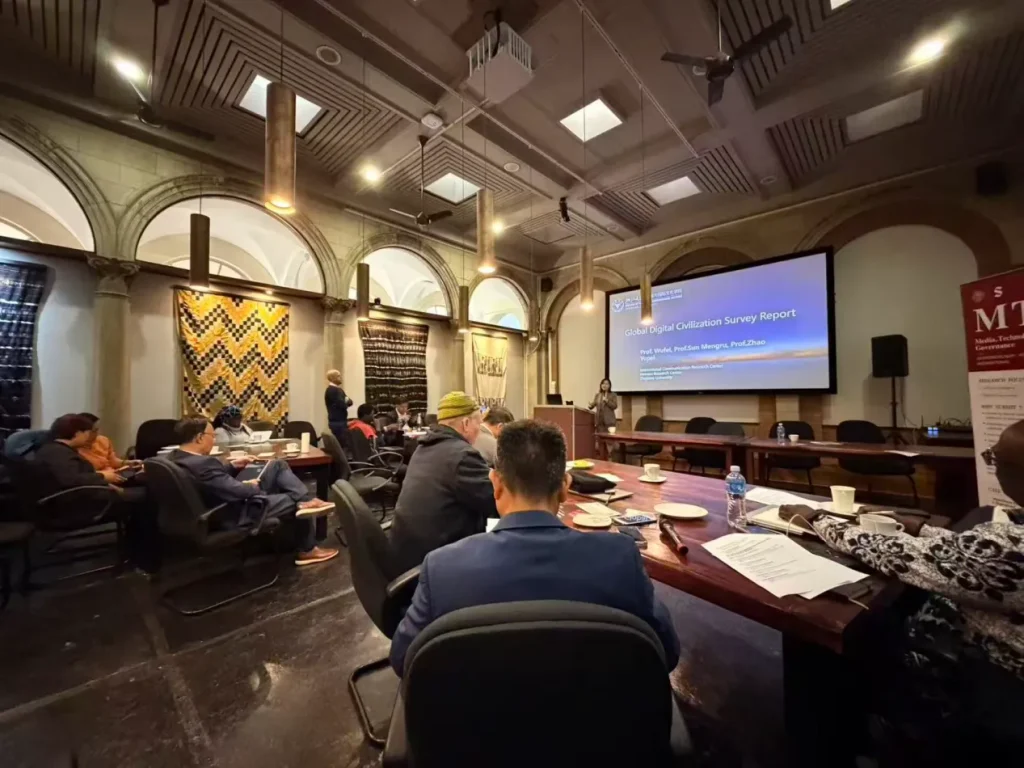
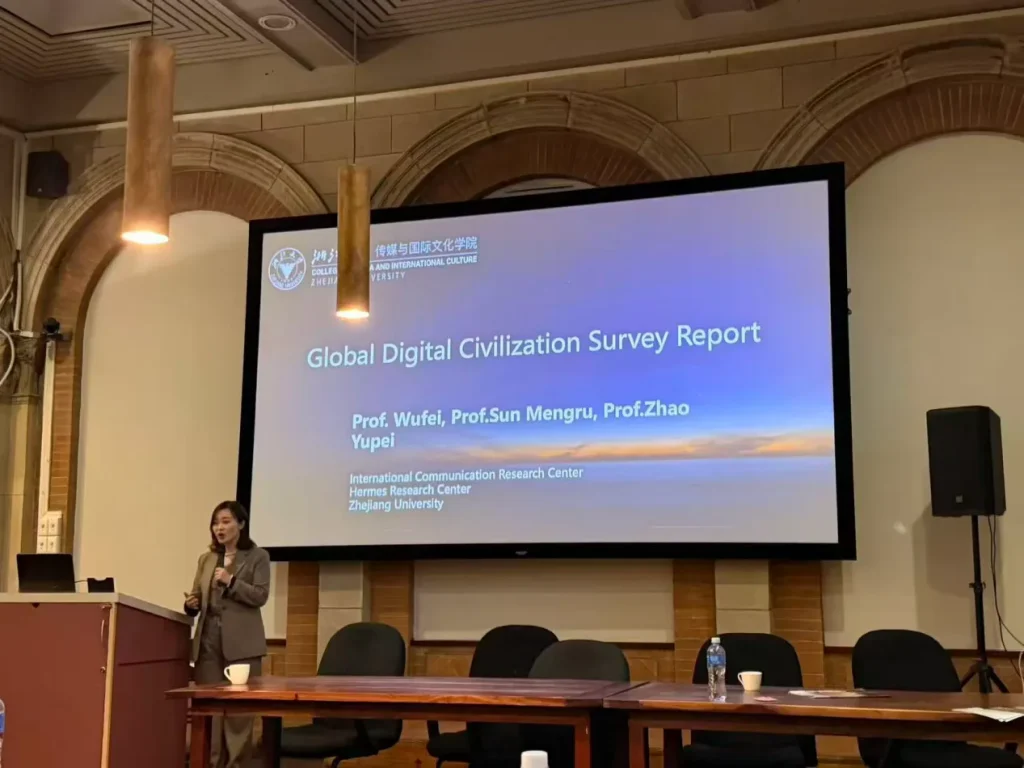
At the pre-conference of the 76th Annual Meeting of the International Communication Association (ICA 2026) – the 2026 Africa-Asia Symposium (AA Symposium), Professor WuFei, Researcher Sun Mengru and ZhaoYupei, Vice Dean of College of Media and International Culture, Zhejiang University, officially released the “Global Digital Civilization Survey Report” on June 3, at Johannesburg, South Africa.
This is not only the first international academic presentation of the report, but also an academic action with clear symbolic significance: an empirical investigation report on global civilization led by Chinese scholars was released on the African continent at the pre-conference of the International Communication Association (ICA), which in itself is a powerful voice in the global dissemination of research knowledge power structure.
Discussions surrounding digital civilization, AI governance, and the global information order have been heavily concentrated in the Global North — from Brussels to Washington, from the OECD to the G7. Countries in the Global South have largely figured in these agendas as “objects of study” rather than “researchers who pose the questions.”
By choosing to hold this global launch at the University of the Witwatersrand (Wits), a leading research university in Africa, and embedding it within the pre-conference of ICA — the premier international academic platform for communication studies — the team from the International Communication Center at Zhejiang University conveys a clear academic-political stance: the production of knowledge in global communication can no longer be unilaterally dictated by Northern agendas; the debate on digital civilization must accommodate the experiences, perspectives, and theoretical imaginations of the Global South.
The AA Symposium itself is themed “Connecting Innovations in Communication, AI, and the Humanities.”
The release of the Zhejiang University report infuses this notion of “connection” with substantive epistemological content — a connection that is not merely technological or geographical, but one that links discourse power and the spaces of knowledge production themselves.
(Zhejiang International Communication Center)