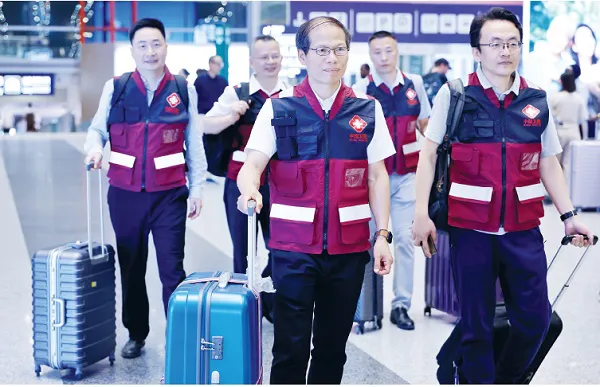
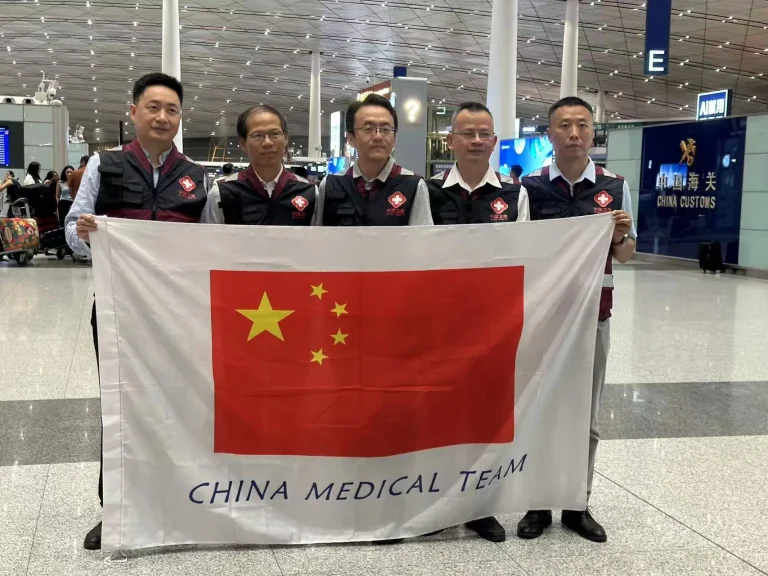

China has announced the deployment of a medical expert group to the Democratic Republic of the Congo (DRC) to support efforts against a growing Ebola outbreak caused by the Bundibugyo virus strain.
The move, announced by the Director-General of the African Affairs Department of China’s Ministry of Foreign Affairs, includes emergency humanitarian aid and underscores Beijing’s longstanding commitment to health cooperation across the African continent.
The team departed Beijing on June 2, shortly after the World Health Organization (WHO) declared the outbreak a Public Health Emergency of International Concern (PHEIC) on May 17.
The outbreak, centered in Ituri Province, has spread to neighboring Uganda. As of early June, DRC authorities reported around 321 confirmed cases and 48 deaths, with additional suspected cases under investigation.
Challenges include insecurity in conflict-affected areas, population movements linked to gold mining, and cross-border transmission. Notably, no approved vaccines or specific treatments exist for the Bundibugyo strain, complicating response efforts.
This latest intervention builds on China’s history of Ebola support. During the major 2014-2016 West Africa outbreak, China provided over $123 million in aid, dispatched more than 1,200 medical workers, constructed treatment facilities, and established a biosafety lab—marking one of its largest-ever humanitarian responses to a public health crisis.
Similar assistance was extended in subsequent outbreaks, including in the DRC in 2018.
China-Africa healthcare collaboration dates back over six decades. In 1963, China sent its first medical team to Algeria, initiating a program that has since dispatched tens of thousands of medical personnel to more than 50 African countries.
These teams have delivered hundreds of millions of diagnoses and treatments, built hospitals, established anti-malaria centers, and trained local health workers.
This “barefoot doctor” style diplomacy emphasizes practical, on-the-ground support, infrastructure development, and capacity building, often framed as South-South cooperation.
In recent years, cooperation has expanded significantly. Health initiatives now include public health surveillance labs, pandemic response, and multilateral efforts through platforms like the Forum on China-Africa Cooperation (FOCAC) and partnerships with the Africa Centres for Disease Control and Prevention (Africa CDC).
During the COVID-19 pandemic, China further scaled up vaccine diplomacy and medical supplies. The current Ebola response includes not only direct clinical support but also collaboration with the African Union to strengthen continental preparedness.
Experts note that China’s approach combines Western medicine with traditional Chinese medicine where appropriate, drawing on its domestic experience managing outbreaks like SARS. The five-member team, led by specialists such as Professor Lu Ming, will focus on prevention, treatment, training, and containment alongside Congolese and international partners.
As the outbreak tests regional resilience, China’s rapid response reinforces its role as a key health partner for Africa.
This assistance arrives at a critical time, offering both immediate relief and long-term support for health system strengthening in a region vulnerable to emerging infectious diseases. Officials emphasize that such solidarity reflects mutual benefit and shared development goals between China and African nations.