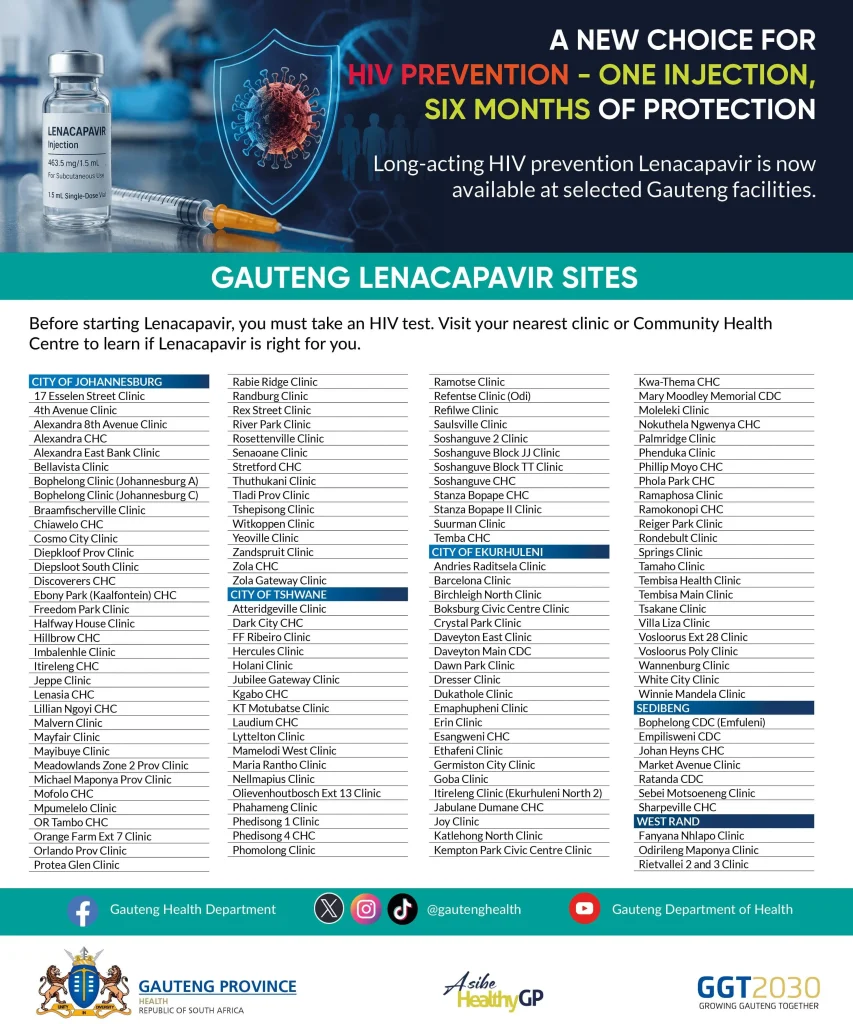
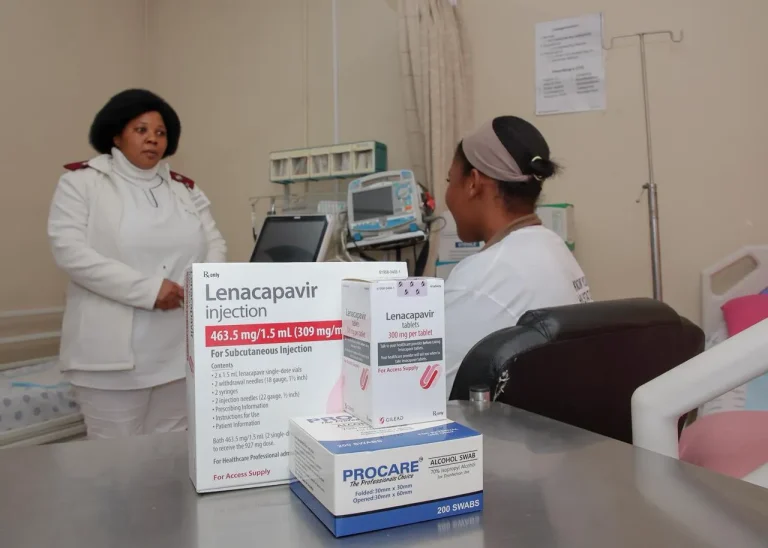

The Gauteng Department of Health has announced the phased rollout of Lenacapavir, a groundbreaking long-acting HIV prevention injection, at 133 public healthcare facilities across the province from Monday, 8 June 2026.
The new medication offers HIV-negative individuals who are at high risk of infection an alternative HIV prevention option through a single injection administered every six months. The rollout forms part of a national initiative by the Department of Health aimed at expanding HIV prevention services and helping South Africa achieve its goal of ending AIDS as a public health threat by 2030.
As South Africa’s most populous province and one of the regions most affected by HIV, Gauteng has been selected as a key implementation site during the first phase of the programme. The injection will initially be available at facilities across Johannesburg, Tshwane, Ekurhuleni, Sedibeng and the West Rand.
Lenacapavir is a long-acting form of pre-exposure prophylaxis (PrEP), a medication used to prevent HIV infection. Health officials say it will complement existing prevention methods such as oral PrEP, HIV testing services, condom use, voluntary medical male circumcision and post-exposure prophylaxis (PEP). The injection is expected to benefit individuals who struggle to take daily HIV prevention tablets.
The Gauteng Department of Health has been allocated enough stock to initiate 56,079 eligible clients between June 2026 and March 2027. An initial allocation is expected to cover 18,809 people, with additional supplies to be delivered quarterly to ensure uninterrupted access to the medication.
To prepare for the rollout, healthcare workers, pharmacists, programme managers and data personnel have undergone training, while monitoring systems and clinical guidelines have been put in place to support safe and effective implementation.
The first phase of the programme will prioritise groups that remain particularly vulnerable to HIV infection. These include adolescent girls and young women, adolescent boys and young men, sex workers, men who have sex with men, transgender persons, people who inject drugs, and pregnant and breastfeeding women.
To raise awareness about the new prevention option, the department will conduct facility activations, community dialogues, media campaigns, radio programmes, peer educator initiatives and social media outreach. Residents are encouraged to seek information from healthcare workers and other trusted sources.
Health officials have stressed that Lenacapavir is not a replacement for other HIV prevention measures. They have urged the public to continue making use of HIV testing services, condoms, sexually transmitted infection (STI) prevention and treatment services, voluntary medical male circumcision and HIV treatment programmes.
Members of the public who believe they may qualify for HIV prevention services are encouraged to visit participating healthcare facilities for HIV testing, screening and further information on Lenacapavir.