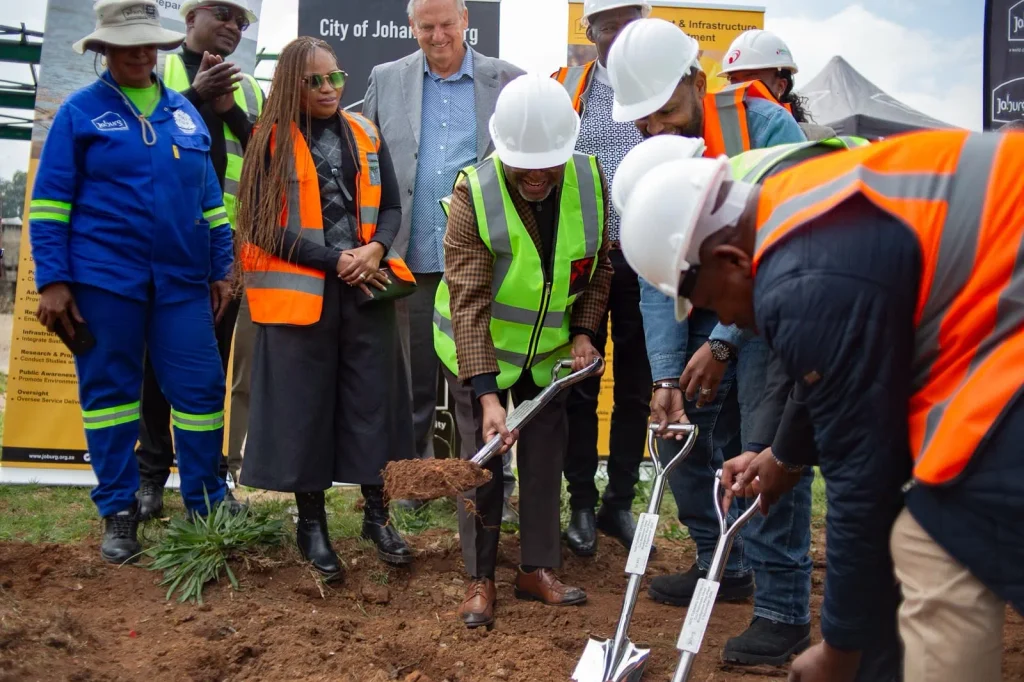
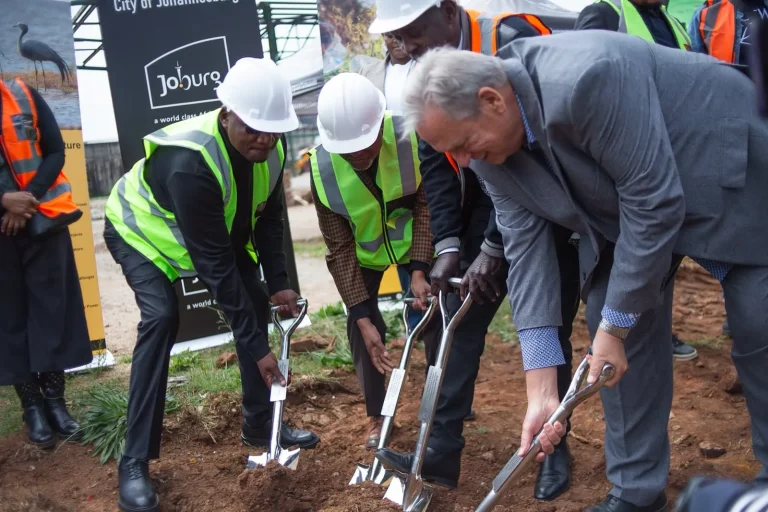

The City of Johannesburg has taken a major step towards more sustainable waste management after officially breaking ground on a biodigester pilot plant at the Robinson Deep Landfill site on Tuesday, 8 September 2026.
The SOD-turning ceremony, led by Executive Mayor Cllr Dada Morero, marks the beginning of construction of a municipal-scale facility that will use anaerobic digestion technology to process approximately 50 tonnes of source-separated biodegradable waste each day.
The project forms part of the City’s Integrated Biodegradable Waste Management Programme and is being implemented in partnership with the Global Environment Facility (GEF), the United Nations Environment Programme (UNEP) and the Development Bank of Southern Africa (DBSA).
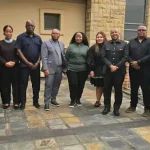
Mayor Morero was joined at the ceremony by MMC for the Environment and Infrastructure Services Department (EISD), Cllr Jack Sekwaila, EISD Executive Director Dr Tebogo Modiga, Ward 124 Councillor Mongameli Mnyameni, representatives from the DBSA and Energidrop, as well as senior City management.
The Development Planning Department, the University of Johannesburg Research and Development Centre and Energidrop are among the key partners supporting the initiative, with Energidrop serving as the City’s technical advisor.
The pilot project is intended to help Johannesburg tackle growing pressure on landfill capacity while addressing greenhouse gas emissions and promoting more sustainable approaches to waste management.
Speaking at the ceremony, Mayor Morero said the project signals a move from policy development towards practical implementation.
“Today’s sod-turning ceremony marks the transition of this important project from planning to implementation,” said Morero.
He added that the initiative reflects the City’s ambition to create a cleaner, greener and more resilient Johannesburg through innovative infrastructure solutions.
The project will also be supported by separation-at-source initiatives at locations such as the Johannesburg Fresh Produce Market and selected commercial establishments.
These programmes are expected to improve both the quality and availability of biodegradable waste that will serve as feedstock for the facility.
MMC Jack Sekwaila described the initiative as an important shift in how organic waste is viewed and managed.
“Organic waste should increasingly be seen as a resource with the potential to generate renewable energy and support a circular economy,” Sekwaila said.
The Robinson Deep facility will operate as a demonstration site, allowing the City and its partners to assess the technical, operational and financial performance of municipal-scale anaerobic digestion technology under Johannesburg’s local conditions.
Makhosazana Mtshali, the City’s Director of Waste Management and Regulation, described the Robinson Deep Landfill Biogas Pilot Plant as the flagship demonstration project under the programme.
According to Mtshali, the pilot will generate important technical, financial and operational data that could guide the City’s decisions on future infrastructure investments and potential expansion of the technology.
Construction of the facility is expected to be completed in March 2027, after which the plant will be commissioned and undergo a 12-month operational testing phase.
The project is expected to contribute to Johannesburg’s long-term waste management goals by reducing reliance on landfill sites, recovering valuable resources from organic waste, lowering environmental impacts and exploring renewable energy opportunities.
The initiative places Johannesburg among municipalities exploring practical ways of transitioning towards a circular and resource-efficient waste management system.