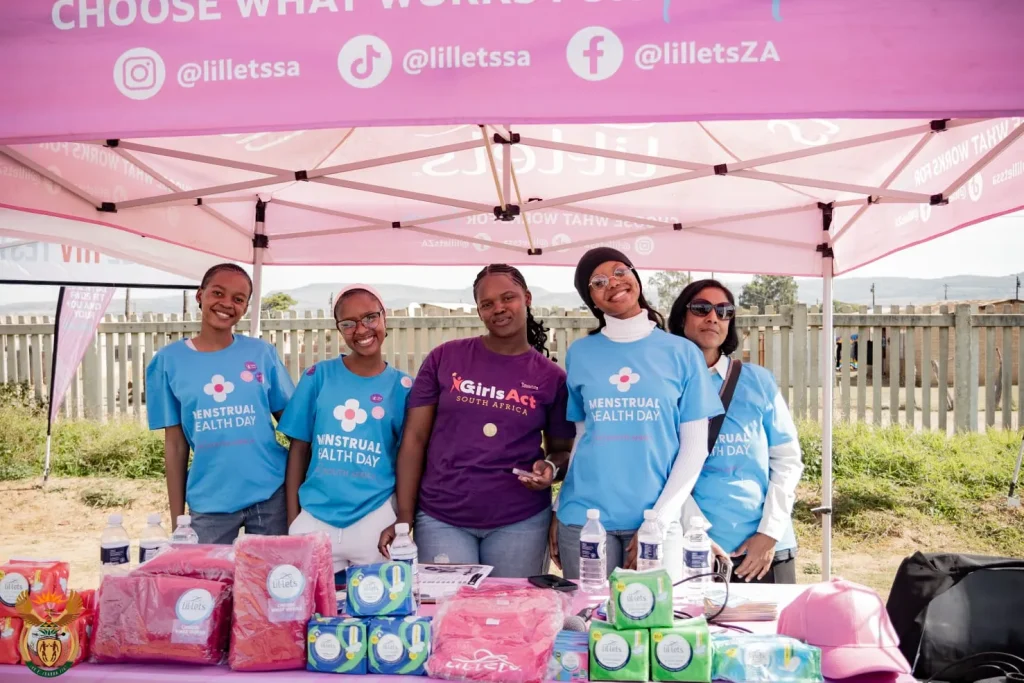
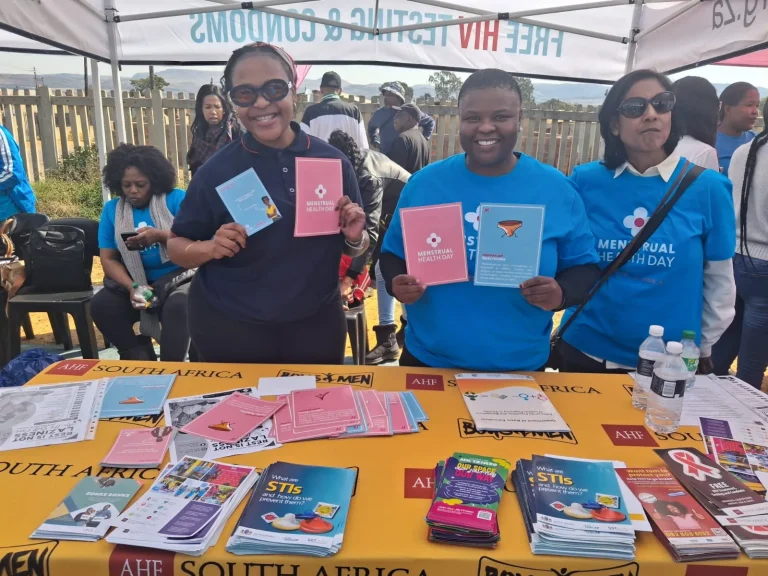

AHF South Africa commemorated Menstrual Health Day at Kgoro ya Thuto Secondary School in Heidelberg Extension 23 on Thursday, (May 28) with a strong call for dignity, access to menstrual products, and an end to stigma surrounding menstruation.
The event formed part of the organisation’s efforts to promote menstrual health awareness among young people while encouraging open conversations around periods, hygiene, and reproductive health.
Observed annually on May 28, Menstrual Health Day highlights the importance of ensuring that women and girls have access to safe, clean sanitation facilities and affordable sanitary products.
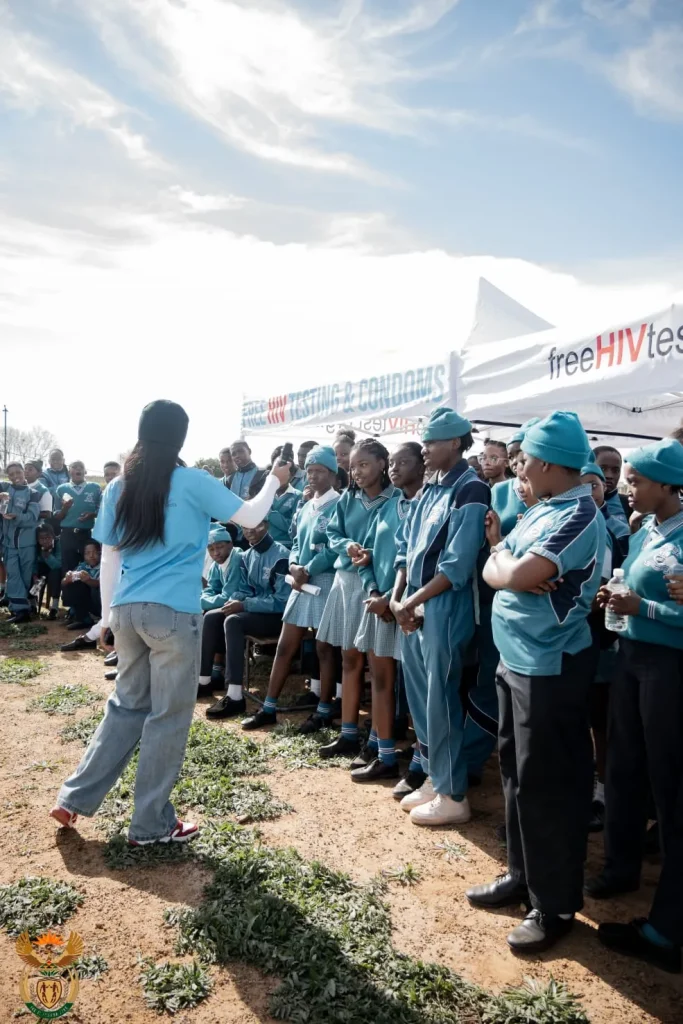
The programme was hosted in partnership with the Department of Basic Education, the Baithudi Mampane Foundation, Lil-lets and Mina. The initiative also forms part of AHF’s Youth Protection Programme and Girls Act programme.
Learners participated in educational sessions designed for both girls and boys, focusing on menstrual hygiene, cycle tracking, cleanliness, and debunking myths and misconceptions surrounding menstruation.
Organisers said the learners would also develop an advocacy document highlighting menstrual health challenges and barriers faced in schools. The findings will contribute to a report that will later be presented to Parliament.
AHF Africa Bureau Chief, Martin Matabishi, said millions of women and girls across Africa still struggle to access basic menstrual products and safe sanitation facilities.
“Menstrual health is not a luxury. It is a fundamental part of public health and HIV and STI prevention,” said Matabishi.
He added that governments should remove taxes on menstrual products, invest in access, and break the silence around menstruation to protect the dignity and health of women and girls.
According to AHF, nearly two billion people menstruate globally, with around 500 million experiencing period poverty due to limited access to sanitary products, proper facilities, and supportive environments.
The organisation warned that these challenges often result in girls missing school, facing economic vulnerability, or being exposed to risky coping mechanisms that may increase vulnerability to HIV and sexually transmitted infections.
AHF also stressed the importance of addressing stigma and misinformation around menstruation, saying taboos in many communities continue to prevent open discussions and access to reproductive health information.
Speaking at the event, Lydia Phiri said no girl should feel ashamed because of a natural biological process.
“A period is not a weakness — it is a reminder of the strength carried by millions of women every day,” she said.
Meanwhile, Sindi Tom said menstruation should never be associated with shame.
“Every girl deserves dignity, education, and access to safe menstrual care,” she said.
The event reinforced calls for greater awareness, access to menstrual products, and improved support systems to ensure girls can remain in school and manage their health safely and with dignity.