Gauteng Education budget rises to R70.9 billion
Gauteng currently serves more than 2.86 million learners across 3 320 schools, including more than 2.43 million learners in public schools.

The Gauteng Department of Education has increased its budget to R70.9 billion for the 2026/27 financial year, with renewed investment planned for school infrastructure, early learning, learner safety and academic performance.
The budget, tabled at the Gauteng Provincial Legislature on Tuesday, June 23, is R2.9 billion higher than the R68 billion allocated in the previous financial year.
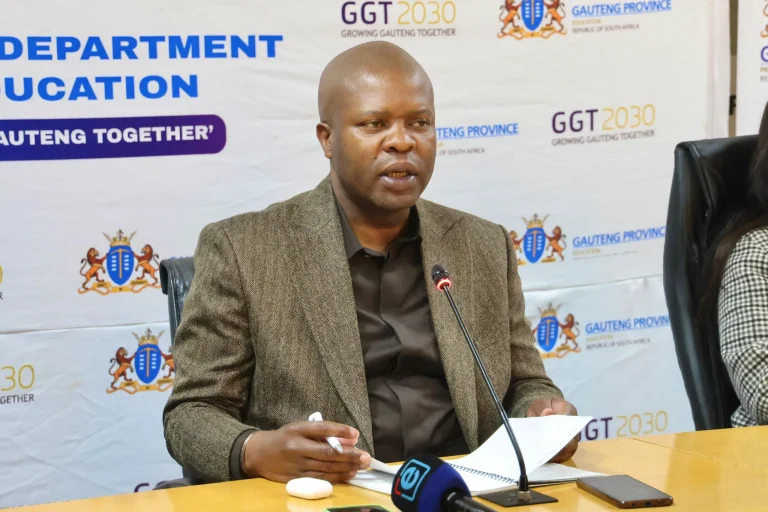
Gauteng Education and Sports, Arts, Culture and Recreation MEC Lebogang Maile said the budget was aimed at strengthening public education amid growing pressure on schools across the province.
“Education is not the responsibility of government alone, but a collective societal duty,” Maile said.
“We continue to hold the view that parents, communities, civil society, labour, business and all sectors of society must play an active role in shaping the future of our children.”
Gauteng currently serves more than 2.86 million learners across 3 320 schools, including more than 2.43 million learners in public schools.
The MEC said the province continued to face pressure from rapid in-migration, urbanisation, overcrowding, infrastructure backlogs and growing demand for learner placements, particularly in township, informal settlement and inner-city schools.
“These pressures require us to think differently about education delivery, infrastructure planning and long-term sustainability,” Maile said.
The budget is presented under the theme, “It Takes A Village To Raise A Child”, with the department outlining four strategic priorities for the financial year. Under the same theme, MEC Maile has called on parents, guardians and communities to play an active role in learners’ development.
A total of R994 million has been allocated to Early Childhood Development, including expanding access to Grade R and improving school readiness.
“The battle for educational success begins long before Grade 1,” Maile said.
The department has also allocated R1.2 billion to improve learner performance in Mathematics, Science, Technology, reading development and technical education.
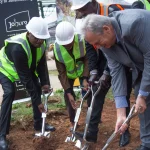
Infrastructure remains a major focus, with R2.7 billion set aside for infrastructure investment. A further R3.7 billion will support education modernisation initiatives, including school reorganisation, district support, principal development and the expansion of Schools of Specialisation (SoS).
Maile acknowledged that the allocation would not immediately solve all infrastructure challenges.
“While these allocations will not resolve all historical backlogs immediately, they represent an important step towards easing overcrowding and improving learning conditions in some of our most affected communities,” he said.
The department has allocated R3.3 billion for learner wellness, psychosocial support, anti-drug programmes, school health interventions, sports, arts and cultural development.
“Learning cannot thrive where violence, bullying, trauma, gangsterism and substance abuse are left unattended. Safe schools remain non-negotiable,” Maile said.
The department will also receive R3.9 billion in conditional grants to support infrastructure delivery, school nutrition, Early Childhood Development, Mathematics, Science and Technology programmes, HIV and AIDS Life Skills education, and support for learners with profound intellectual disabilities.
Staff compensation remains the largest component of the budget, with R54.6 billion, or 77.1% of the total allocation, earmarked for educators, therapists, specialists and support staff.
The department has further allocated R288 million to the Sci-Bono Discovery Centre and R383 million to the Matthew Goniwe School of Leadership and Governance.
Maile said the provincial government remained committed to an education system that responds to the needs of Gauteng communities.
“Through this Budget Vote, we reaffirm our commitment to building a public education system that is inclusive, equitable, safe and responsive to the realities of our people,” he said.
“We remain convinced that education is the most powerful instrument through which we can confront poverty, inequality and unemployment, and through which we can build a more prosperous Gauteng.”